Pages

Showing posts with label Motorola. Show all posts

Friday, 24 February 2012

Apple says iCloud and MobileMe push email down in Germany, due to Motorola lawsuit

By at EnGadget: 
Cupertino says it is has suspended push email via iCloud or MobileMe for users in Germany, due to "recent patent litigation by Motorola Mobility." Numerous disputes currently rage between the two companies, but this issue likely relates to a recent injunction Motorola won against iCloud. Push still works for Contacts and Calendars, but there's a page up on Apple's German support site telling people to use the Fetch settings on their iOS device to collect emails. There's a similar page on Apple's US site giving the same instructions to users who are traveling to Germany. Meanwhile, push email for OS X and via other service providers such as Microsoft Exchange Active Sync, is unaffected.

Tuesday, 14 February 2012

US approves Google's buyout of Motorola

By T.C. Sottek at TheVerge: 
The US Department of Justice has just approved Google's buyout of Motorola, shortly after the European Commission cleared the deal earlier today. Google still needs the consent of China, Israel, and Taiwan to complete the deal, but if successful, it will reap a rich harvest of mobile patents from Motorola.
The DOJ echoed statements made earlier today by the EU: it maintains that while this acquisition isn't likely to harm the mobile market, it's still on guard against improper use of essential patents in the wireless device industry, and "will not hesitate to take appropriate enforcement action" against violators. It also says that Motorola Mobility has "had a long and aggressive history of seeking to capitalize on its intellectual property," but that Google's acquisition of Motorola is unlikely to change that policy. Seeing as the DOJ says that Google's commitments regarding its essential patent licensing policies are "ambiguous," there's likely plenty of legal action around Motorola's essential patents still to come.

Monday, 15 August 2011

Google To Buy Motorola


Google has bought Motorola Mobility, for $12.5bn --
about £7.6bn. Mobility is the part of Motorola that makes phones. Google
says the acquisition will "supercharge" Android.

Motorola
is certainly no stranger to Google's mobile OS. It's the company behind
devices such as the Motorola Milestone and the first Honeycomb
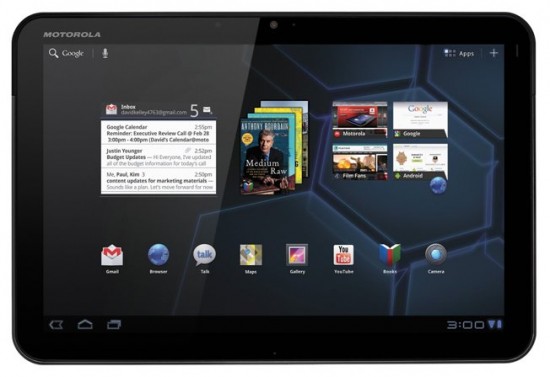
tablet, the Motorola Xoom. So the purchase does make a
degree of sense.

Breaking the news in a blog post, Google CEO
Larry Page said, "Together, we will create amazing user experiences that
supercharge the entire Android ecosystem for the benefit of consumers,
partners and developers everywhere."


Sounds adorable. But Motorola has never actually made a truly
must-have Android gadget -- could there be another reason behind Google
buying Motorola Mobility?


Patent palava 


Google's Android
operating system has recently come under attack from other companies such as
Apple, which claims the robot-powered OS infringes on its patents. As
Page notes in his blog post, in acquiring Motorola, Google will add a
whole slew of patents to its roster, giving it legal ammunition in the
fight against Android's enemies.


"This acquisition is primarily about acquiring Motorola's
sizeable patent portfolio," reckons Nick Dillon, devices and platforms
analyst at Ovum.


"The move raises concerns for Android handset manufacturers,"
Dillons adds, "as the acquisition will mean that Google will move from
becoming a software provider to becoming a hardware vendor."


Android rift?


That means Google will likely be pushing
out products that are in direct competition with its Android partners --
companies such as Samsung and LG. "If Google provides preferential
access to the Android code to its own hardware division, this would
place other vendors at a disadvantage and may lead them to question
their commitment to the platform, potentially pushing some towards other
platforms," Dillon said.


In other words, if Motorola is seen to get too much special
treatment from Google, it could cause a rift among companies that build
Android devices.


Google has gone as far as collecting
quotes from the CEOs of Android-lovin' companies to show that
there's no ill feeling harboured. HTC CEO Peter Chou said the
acquisition "demonstrates that Google is deeply committed to defending
Android, its partners, and the entire ecosystem". Big cheeses from other
companies echoed the sentiment.

The purchase, which is likely to
be completed by the end of 2011 or early 2012, means we may see
Google-branded Android phones and tablets built by Motorola coming out
before too long. That has happened before -- the Google Nexus One was built by HTC, and the Nexus S was constructed by Samsung.

Monday, 18 July 2011

Android Tablets Get an iPad-Like "2x" Mode with Android 3.2

On Friday, Google officially announced the Android 3.2 platform, which offers a handful of enhancements, including one that will let you run smartphone apps on larger devices. A new compatibility display mode will provide an alternative to the UI stretching available today, and instead lets you "zoom" in on an app on a simulated low-res screen.
Essentially, it's like the iPad's 2x mode, but for Android.

Smartphone-Sized Apps Get New Zoom Mode

According to Xavier Ducrohet, Android SDK Tech Lead, the new mode provides "a pixel-scaled alternative to the standard UI stretching" for apps that were not designed to run on larger screens.
More simply put, it means that the 200,000+ Android applications designed for smartphones can now work on tablets. (How well the mode works may be another story.)
Still, it's good news for Android tablet makers, as previously, the number of tablet-only apps was embarrassingly low. The New York Times did a little digging in July and found that there may have been just 100 apps specifically designed for Android Honeycomb at that time. Yikes! Compare that with the 100,000 native iPad apps and it's clear that getting developers to build native apps for Android tablets has been a challenge, to say the least.
Now developers have an alternative - and one they don't have to code for. In fact, only the 100 or so Honeycomb app developers will have to make any changes, if they choose, and disable the zoom option on their native tablet apps.

Other Updates in Android 3.2

Other highlights from Android 3.2 include the following:

  • Optimizations for a wider range of tablets. A variety of refinements across the system ensure a great user experience on a wider range of tablet devices.
  • Media sync from SD card. On devices that support a removable SD card, users can now load media files directly from the SD card to apps that use them.
  • Extended screen support API. For developers who want more precise control over their UI across the range of Android-powered devices, the platform’s screen support API is extended with new resource qualifiers and manifest attributes, to also allow targeting screens by their dimensions.
Google also recently released a new version of the SDK Tools (r12), the Eclipse plug-in (ADT 12) and updated the NDK to r6.

Sunday, 17 July 2011

16 of top 20 smartphones are Android powered says latest Media Mix report for June

No one can take raw data and come up with as many categories as Millennial Media and its monthly Media Mix report can. Using the number of impressions on the firm's media network, certain rankings can be devised. For example, 16 out of the top 20 phones globally in the June 2011 report are Android powered even with the Apple iPhone listed as number one and the BlackBerry Curve as number two, making 16.19% and 5.57% of impressions on Millennial Media's ad network respectively. This could be due to the fact that there are many different versions of both phones that are still in operation today. The first Android model in the report is the third place Motorola DROID with 2.95% of impressions. The high showing of the original DROID shows how ruggedly the phone was built and despite specs that would be considered out of date, many original owners still use the model as their everyday phone; we would expect to see a massive move to a new device when the 2 year anniversary of the model's launch comes this November. The Google Nexus S doubled the percentage of impressions it had month over month and is now number four on the top 20 list. The BlackBerry Bold 2 rounds out the top 5.


Among manufacturers, Apple devices accounted for 30.76% of impression share to lead the way. Samsung showed 10% growth month to month and is second behind Apple with a 14.94% share. RIM, HTC and Motorola round out the Top 5. Among the breakdown in connectivity, a Wi-Fi network was used during 34% of impressions followed by the 18% slice of the pie belonging to Verizon and 12% from Sprint-Nextel models. Strangely, AT&T was buried in a three-way tie for fourth with target T-Mobile and the "other" category made up of mostly overseas carriers, all having 8% each. Touchscreen devices led the way among different device input models, accounting for 60% of the phones making an impression on the MM network. That dovetails with the 65% of devices making impressions that would be considered a smartphone. And, looking at smartphones only, Android devices led with a 54% share followed by the 26% owned by iOS and the 15% from BlackBerry. Symbian devices accounted for 3% of impressions with Windows making up 2%.

The breakdown of app downloads went just as you would expect with the App Store, Android Market and BlackBerry App World ranking as numbers one, two and three respectively. So which apps are we using? Games are first, Music and Entertainment is second while mobile social networking is third. Communications ranks fourth and using a weather app is fifth.

It is amazing that so much data can be devised from looking at Millennial Media's ad network. Check out the sourcelink for more lists based on which phones were used by those clicking on third party ads provided by the company.

via AndroidGuys

16 of top 20 smartphones are Android powered says latest Media Mix  report for June
The Top 20 smartphones in June based on impression share from Millennial Media's network (L) and the top manufacturers (R)

Motorola seeking 1,000 Atrix 4G owners to beta test Gingerbread

Owners of the Motorola ATRIX 4G are getting excited because the device is going through a soak test for Android 2.3. Those who filled out a Motorola Network Survey in the past and had mentioned interest in feedback opportunities with the ATRIX 4G were sent an email from the manufacturer seeking beta testers for Android 2.3.

While the letter didn't state exactly which build of the operating system would be tested on the phone (it called the software Android 2.3.x), the email did specify that the testing was coming soon. 1,000 applicants were to be chosen on a first come-first served basis and we would imagine that the lucky group has already received the notification that they are one of a thousand that will be exchanging their device for a new Gingerbread-loaded ATRIX 4G.


Motorola, of course, asks those who received the email to be quiet about it and not tell other people or pass the news on even to websites(!). Before this soak test begins, those picked by Motorola will receive additional email with instructions. And while you can tell your pals to send in a Motorola Feedback Survey so that they could have a shot at the next feedback opportunity, the manufacturer is demanding complete secrecy during the test. Those who fail to abide by the rules can be removed from the testing by Motorola.

Oh, one last warning. Motorola asks those who think that they might be selected for the beta test, not to PM, email, text or send a letter in a bottle asking Motorola if they have been selected because that could be a ground for removal. Those chosen will be notified by the company.

So it would seem that with the Android 2.3 soak test coming for the Motorola ATRIX 4G, it shouldn't be too long before all owners of the device are updated to the next Android build.